

This month’s BAFTS Member Spotlight introduces Papital, the fair trade jewellery brand founded by Saeed Aghaeekhereshki in Tehran, whose handcrafted pieces reimagine centuries of Persian tilework into wearable art.
Saeed has recently joined the BAFTS Board, bringing a maker’s perspective to the network. Here he shares Papital’s journey – from local Friday markets to fair trade shops across Europe – and what it takes to keep producing fair trade jewellery amid the challenges currently facing artisans in Iran.
From Friday Markets in Tehran to a Global Fair Trade Jewellery Brand
For readers who’ve never come across Papital before – can you introduce us to the story behind the brand, from those early Friday markets in Tehran to where you are today?
Papital was born from my passion for Iranian art, especially traditional tilework and craftsmanship. In the beginning, five friends and I started creating our jewellery ourselves. We began by presenting our pieces at local markets and Friday markets in Tehran.
We quickly noticed that our work attracted a lot of attention from international visitors. They were not only interested in buying the jewellery, but they also wanted to know the stories and cultural meanings behind each piece. This encouraged us to think beyond the local market and explore opportunities to export our work internationally.
As demand grew, we started training new artisans and creating employment opportunities, particularly for women. Today, more than 20 people are actively working with Papital across design, production and sales.
Although the brand has grown significantly since those early days, our original mission remains the same: to introduce Iranian culture and craftsmanship to the world while creating meaningful, sustainable opportunities for artisans through fair trade jewellery.


Persian Tilework and the Story Behind Papital’s Designs
Your jewellery is inspired by Persian tilework and the symbolism of the Papital (ivy) plant. How do you make sure that heritage and craftsmanship come through, and why does that storytelling matter to customers?
Our early designs were deeply inspired by Iranian art and architecture, especially traditional Persian tilework. These historic patterns are not just beautiful decorations; each one carries stories, history and cultural meaning. We try to reinterpret these elements in a contemporary way through jewellery design.
The name Papital comes from the ivy plant, which represents growth, resilience and connection. These ideas reflect the philosophy behind our brand.
Over time, our inspiration has expanded beyond Iranian architecture. We have explored the beautiful blue tilework of the Blue Mosque in Istanbul, the intricate geometric patterns of the Hassan II Mosque in Casablanca, and the remarkable turquoise mosaics of Uzbekistan, particularly in historic cities such as Samarkand.
Although these architectural traditions come from different cultures, they share a common appreciation for craftsmanship, geometry and storytelling. By bringing these influences together, we hope to use jewellery as a bridge between cultures and encourage people to discover the stories behind these remarkable places.
Fair Trade in Practice: Training and Empowering Women Artisans
Papital’s workshops have trained over 50 women and directly support more than 20 people in design, production and sales. What does fair trade look like in practice for your team, day to day?
For us, fair trade is about creating opportunities, developing skills and building long-term relationships based on respect and trust.
Over the years, Papital has trained more than 50 women, and today more than 20 people are directly involved in different areas of design, production and sales.
Many of our team members are women who have gained new skills and the opportunity to create an independent income. We try to provide a working environment where people feel valued and supported.
Here is a short documentary introducing some of the women we work with: watch the film here.


Why UK and European Customers Are Choosing Fair Trade Jewellery
You’ve built partnerships with fair trade retailers across Europe. What has expanding into new markets taught you about what UK and European customers value in ethical, handmade products?
One of the most important lessons we have learned is that customers in Europe and the UK value authenticity more than ever.
They are not simply looking for a beautiful handmade product; they want to understand who made it, how it was produced and the story behind it.
Working with fair trade retailers such as CONTIGO and altraQualità has shown us that quality, transparency and storytelling are far more valuable than competing on price alone in the fair trade jewellery market.
Keeping a Fair Trade Jewellery Supply Chain Running Amid Crisis in Iran
You founded Papital in Tehran and have grown it into a business trading internationally. Could you tell us how the current situation in Iran is shaping the way you and your artisans work? What does it takes to keep a fair trade supply chain running in that context?
Working in Iran has become increasingly challenging in recent years. Inflation, rising material costs, electricity shortages, internet restrictions, banking difficulties and international sanctions have all affected our production process.
The recent war and regional tensions created further challenges (read BAFTS’ statement of solidarity here). At times, shipping routes were blocked or severely limited, making it much harder to deliver orders to international customers and maintain a reliable supply chain.
Keeping a fair trade jewellery supply chain running in such circumstances requires flexibility, patience and strong relationships with our artisans. Continuing this work is also a commitment to preserving traditional skills, supporting artisans and creating hope for the future.

Saeed Joins the BAFTS Board
A New Role, a Maker’s Voice on the Board
You’ve recently joined the BAFTS Board. What made you want to take on that role, and what do you hope to bring to the network from your own experience as a maker and a small business owner?
I have always seen fair trade as more than just a business model. For me, it is a way to create positive social impact.
When the opportunity to join the BAFTS Board came up, I felt it was a valuable opportunity to bring the perspective of a maker and a small business owner into the network.
I hope to share my experiences from working directly with artisans, building an ethical supply chain and growing a small creative business internationally. I also hope to contribute to strengthening connections between producers, retailers and fair trade organisations.
What BAFTS Membership Has Meant for Papital
What has being part of the BAFTS network meant for Papital as a business?
The biggest benefit I did not expect was the spirit of collaboration between BAFTS members. People are willing to share their knowledge, experiences and challenges rather than simply compete with each other.
Being part of this community provides support, inspiration and opportunities that are difficult to create alone.
Through BAFTS, I have been able to build relationships with around 10 fair trade shops across the UK and introduce Papital products to new customers. The network has also created opportunities for international collaboration, attending events, learning from other members and connecting with new buyers.
The exchange of knowledge and experiences within the BAFTS community has played an important role in our growth. I feel that being part of BAFTS has given Papital greater credibility and helped us develop our presence in the UK market.
Most importantly, we feel part of a community with a shared goal: creating a fairer trading system and making a positive impact for producers and consumers around the world.
Find out more about being a BAFTS member here.

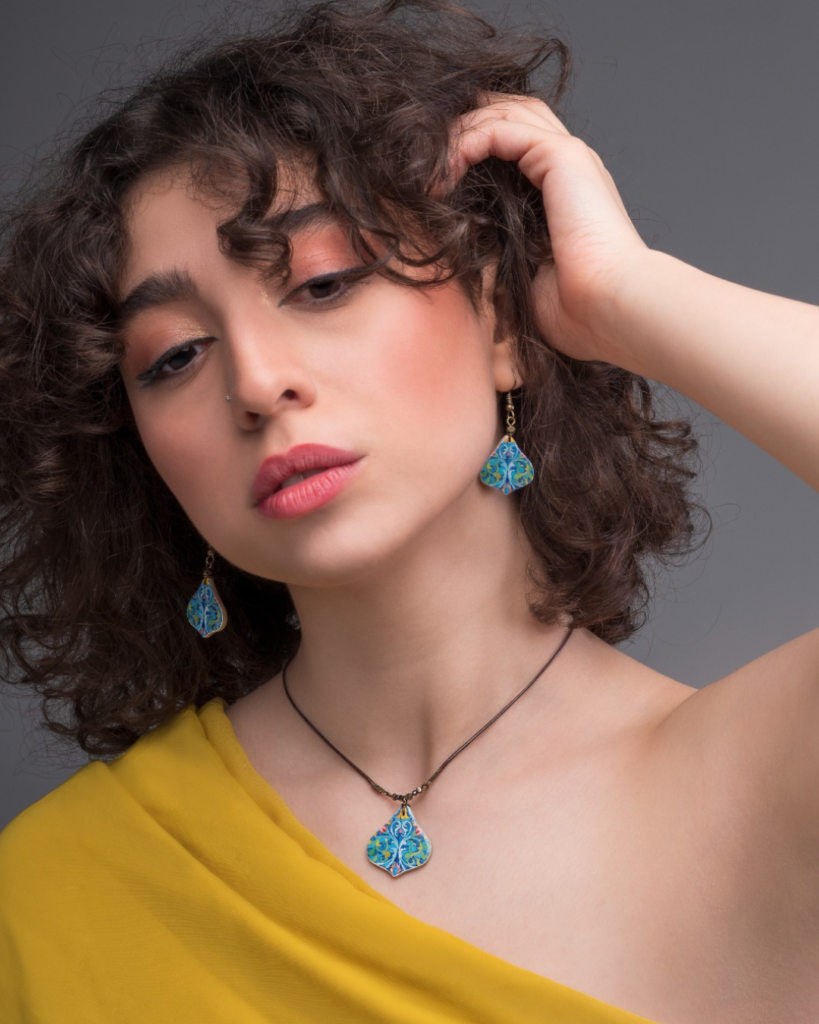
Left and Right – Beautiful Papital Jewellery.
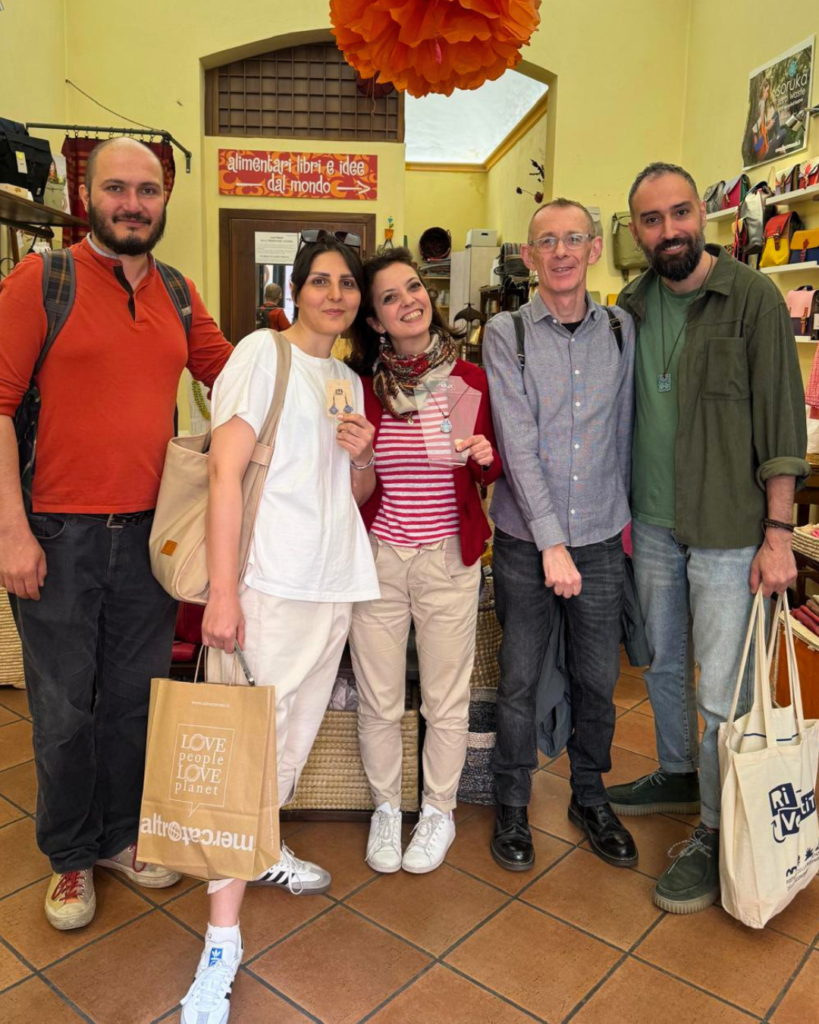
Centre – Saeed (far right) with Nahid ( Papital’s Workshop Supervisor), who travelled from Iran to Italy to attend the Fair Trade Fashion Conference in Bologna and Younes (Papital’s European Sales Manager), visiting one of the Altraqualita Fair Trade shops in Bologna that stocks Papital jewellery.
What’s Next for Papital’s Fair Trade Jewellery Journey
Looking ahead, what’s next for Papital?
We want to continue creating new collections inspired by Iranian art and architecture while also exploring influences from different cultures around the world.
We aim to expand our artisan community, create more opportunities for training and strengthen our presence in international markets.
At the same time, we recognise that areas such as branding, understanding global markets and developing our social media presence are important areas where we want to continue improving.
We hope BAFTS will remain an important part of this journey by helping us build new connections, share knowledge and support the growth of fair trade businesses like Papital.